
Dr. Saurabh Tiwari – Orthopedics in Prayagraj
Consult Dr. Saurabh Tiwari, Orthopaedic Surgeon in Prayagraj, for bone, joint, spine, fracture and orthopaedic treatment.
By DrDay Editorial Team · 15 Nov 2026 · 6 min read · Pending medical review
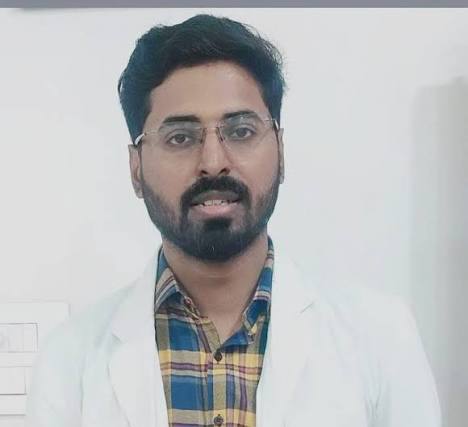
Dr. Saurabh Tiwari – Orthopedist in Prayagraj
<p>If you are looking for orthopedics in Prayagraj, this page explains who Dr. Saurabh Tiwari is, which bone, joint and muscle problems an orthopedist looks after, and what to expect at a first visit. It also covers when to see an orthopedist and how to choose one.</p>
Quick facts
<h3><strong>Name- Dr. Saurabh Tiwari</strong></h3><p>Specialty- Orthopedics</p><p>Qualification- MBBS, MD [VERIFY: MD specialty, college, year]</p><p>Registration no- 89570</p><p>Experience- 7 years</p><p>City- Prayagraj</p><p>Clinic address- BC C-37, Barsana Sector, Kalindipuram, Prayagraj, UP – 211011</p><p>Timings- Monday – Saturday 7:00 AM – 9:00 AM & 6:00 PM – 8:00 PM</p><ol><li data-list="bullet"><span class="ql-ui" contenteditable="false"></span>Languages- English, Hindi</li><li data-list="bullet"><span class="ql-ui" contenteditable="false"></span>Consultation fee- ₹550 per visit</li></ol>
About Dr. Saurabh Tiwari
<p>Dr. Saurabh Tiwari is an orthopedist practising in Prayagraj with 7 years of experience. He holds an MBBS and an MD [VERIFY: specialty, college and year of passing]. His registration number is 89570, which you can check on the public register of the medical council or the NMC .</p>
Here is how he describes his approach:
<p>“My goal is to provide quality orthopaedic care with a focus on accurate diagnosis, personalized treatment and patient comfort. I believe every patient deserves individual attention, clear guidance and the right treatment approach to improve mobility, manage pain and achieve a better quality of life.”</p>
Orthopedics in Prayagraj: conditions and services
<p>Fractures and injuries</p><p>Broken bones, sprains and falls need a proper examination and usually an X-ray. The treatment depends on the bone, the type of break and the person’s age and health.</p><p>Joint pain and arthritis</p><p>Knee, hip, shoulder and ankle pain can come from wear and tear, inflammation or an old injury. The doctor examines the joint, may advise tests, and explains the options.</p><p>Back and neck pain</p><p>Many back problems are linked to posture, muscle strain or spine changes. An orthopedist checks whether the cause is simple or needs further investigation.</p><p>Sports and ligament injuries</p><p>Twists, ligament pain and sudden knee or shoulder problems during play or exercise are assessed by examination, and by scans where needed.</p><p>Bone health and osteoporosis</p><p>Weak bones can break easily, especially in older adults. A doctor can advise on tests, diet, vitamin D and calcium, and lifestyle.</p><p>Muscle and tendon problems</p><p>Heel pain, tennis elbow and frozen shoulder are common. The doctor can explain likely causes and what usually helps.</p>
When should you see an orthopedist?
<p>Consider a consultation if you have:</p>
- Joint or bone pain lasting more than a few weeks
- Pain that wakes you at night or gets worse with rest
- Swelling, stiffness or a joint that locks or gives way
- Difficulty climbing stairs, sitting on the floor or walking
- Back pain that spreads down the leg
- Pain after a fall or sports injury that does not settle in a few days
- A child or adult with a visible bone or joint deformity
Go to the nearest hospital emergency immediately if you have:
<p>1.A suspected fracture with severe pain, a bent or deformed limb, or inability to bear weight</p><p>2.A bone visible through the skin, or a wound with heavy bleeding</p><p>3.Numbness or weakness in the legs, or loss of control of urine or stool, with back pain</p><p>4.A hot, red, swollen joint with fever</p><p>5.Sudden calf swelling or breathlessness after an injury, surgery or long immobility</p><p>6.A cold, pale or blue limb after an injury</p>
How to choose an orthopedist in Prayagraj
<p>Use neutral checks instead of advertisements:</p>
- Registration: Look up the doctor’s number on the NMC or state medical council register.
- Qualification and experience: Check that the degrees match the specialty.
- Facilities: Ask whether X-ray and other tests are available nearby, and where the doctor can admit patients if needed.
- Communication: A good doctor explains the problem in simple words and answers your questions.
- Distance and timings: Follow-up visits are common, so pick a clinic you can reach easily.
- Clear fees: Ask about consultation charges before you go. Here, the fee shown on surgeonNear.in is ₹460 per visit.
What to expect at the first visit
<p>History: The doctor asks when the problem started, what makes it better or worse, past injuries, medicines and other illnesses.</p><p>Examination: He checks movement, strength, swelling and how you walk or stand.</p><p>Tests: An X-ray, blood test or scan may be advised. Not every patient needs one.</p><p>Discussion: You are told the likely cause and the options, which may include medicines, exercises, physiotherapy or other treatments.</p><p>Follow-up: You will be told when to return and which warning signs need earlier review.</p>
What to carry:
<p>1.Old X-rays, scans and reports</p><p>2.Prescriptions and a list of current medicines</p><p>3.Your ID and any insurance papers</p><p>4.A written list of your questions</p><p>5.Loose clothing that lets the doctor see the joint</p>
Questions you can ask:
<p>1.Do I need a scan, and why?</p><p>2.What are my options besides surgery?</p><p>3.What is the likely cause of my pain?</p><p>4.Do I need a scan, and why?</p><p>5.What are my options besides surgery?</p><p>6.What should I avoid doing?</p><p>7.How long might recovery take?</p><p>8.When should I come back?</p>
Frequently asked questions
<p>1. What does an orthopedist treat? An orthopedist treats problems of bones, joints, muscles, ligaments and the spine. This includes fractures, joint pain, arthritis, back pain and sports injuries. Which of these a particular doctor treats depends on his training and practice, so ask at your visit.</p><p>2. When should I see an orthopedist for joint pain? See one if pain lasts more than a few weeks, keeps returning, causes swelling or stiffness, or affects walking and daily work. Pain after an injury that does not settle in a few days also needs review. Sudden severe pain or deformity needs emergency care.</p><p>3. Will I need an X-ray on my first visit? Not always. The doctor first asks questions and examines you. An X-ray or other test is advised only if it will help find the cause. Carry any old reports so that tests are not repeated unnecessarily.</p><p>4. Does every orthopedic problem need surgery? No. Many problems are managed with rest, medicines, exercises or physiotherapy. Surgery is considered only for certain conditions. The doctor will explain the options, benefits and risks after examining you, so you can decide with full information.</p><p>5. What is Dr. Tiwari’s consultation fee? The fee is ₹460 per visit on Doctar.in. Charges for tests, procedures or treatment are separate and depend on what is advised. Please confirm current fees with the clinic [VERIFY].</p><p>6. How can I check a doctor’s registration? Every practising doctor must hold a registration number from a state medical council or the NMC. You can search the public register on the NMC website or the state council’s site. Dr. Saurabh Tiwari’s number is 89570 .</p><p>7. What should I bring to an orthopedic appointment? Bring old X-rays, scans, blood reports, prescriptions, a list of medicines, and your ID. Wear loose clothes. Note when the pain started and what changes it. If your child is the patient, bring their vaccination and previous medical records.</p>
Disclaimer
<p>This page is for general information only. It does not replace a consultation with a qualified doctor and must not be used to diagnose or treat any condition. Treatment depends on each person’s examination and tests. In an emergency, go to the nearest hospital immediately.</p>
This article is general patient education, not medical advice. Talk to a doctor about your own situation.